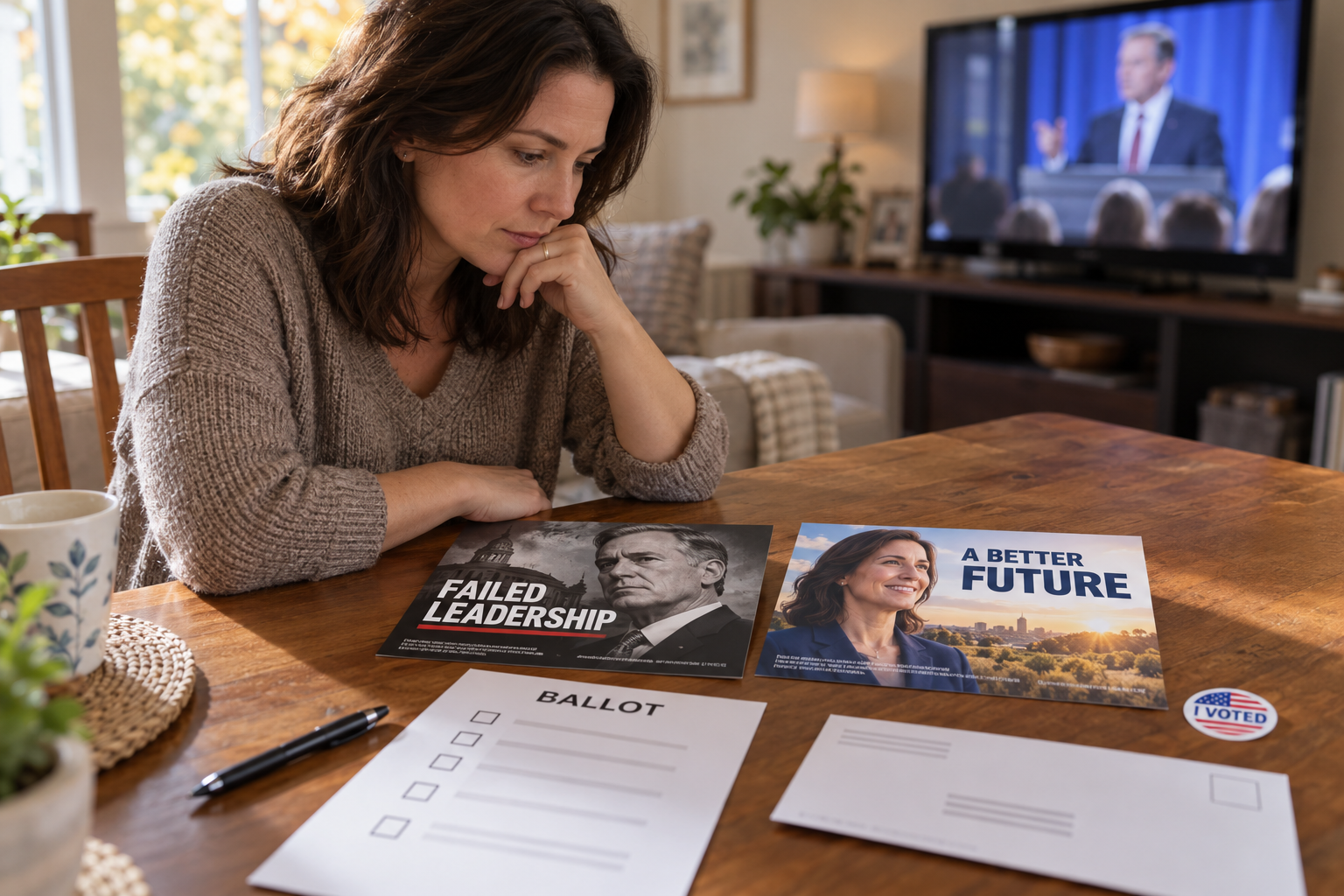
With so much at stake in the November midterm elections in the U.S., I feel compelled to write about the messages asking for your vote. My purpose is to encourage you to sort fact from fiction, truth from lies, and evidence from emotional appeals.
During election season, I listen with two sets of ears: those of a voter and those of a communication coach. One set listens for positions, priorities, and promises. The other listens for how the message is constructed. Why that word? Why that comparison? What am I being invited to feel? And what information would help me decide whether that feeling is justified?
This is an invitation to pay closer attention to the language used to lure you. Whatever your political preferences, you can examine how a message works before you accept what it says. A campaign ad is an argument designed to persuade. Your job is to examine the evidence behind that argument.
Research beyond the campaign ad
If you are informed, involved, and resourceful in researching candidates’ positions, a campaign ad may have little bearing on your final decision. That is the standard I encourage: use an ad as a prompt to investigate, rather than as the basis for your vote. Even when we have done our homework, we should question messages that confirm what we already believe.
Check a quoted statement against the full speech or interview. Compare an accusation with the underlying vote, document, or public record. Distinguish a disagreement about policy from a claim that is demonstrably false. A misleading omission deserves scrutiny, too. Watch for name-calling, card stacking, and emotional appeals designed to harm and discredit.
A party label cannot answer every question
Voting along party lines does not resolve every choice on the ballot. In nonpartisan contests, including judicial and school board races in places where those offices are elected without party labels, we must look beyond familiar political affiliations.
Who is qualified for the responsibilities of the office? What does their record show? For judges, consider experience, integrity, and impartiality. For school board candidates, examine their knowledge of education, approach to budgets, and plans for serving students and families.
Start with your local election office’s sample ballot. Then consult candidate information, public records, reputable local reporting, and nonpartisan voter guides. When a guide or endorsement recommends someone, examine its criteria and who produced it. A polished slogan cannot do that homework for you.
Contrast: clarifying a choice or creating an enemy?
Contrast is a powerful communication tool. It puts two ideas side by side, so the difference becomes clear: more spending or less spending; continuity or change; one approach to a problem or another. At its best, contrast helps you evaluate competing proposals.
Consider these fictional examples:
“My opponent supports expanding this program. I propose a smaller program with stricter eligibility requirements.”
“My opponent wants to waste your money. I will protect your wallet.”
Both establish a difference. But the first identifies a policy choice we can examine. The second assigns a motive and casts one person as the threat and the other as the protector. The question is whether the comparison helps you understand the choice or asks you to accept a judgment before seeing the evidence.
Words can explain. Words can wound.
Listen to the adjectives: “Reckless.” “Weak.” “Dangerous.” “Corrupt.” These words deliver a verdict. A speaker may have evidence to support a serious accusation. But the label itself is not the evidence. There is a meaningful difference between “She voted against this measure” and “She betrayed you.” One describes an action that can be checked. The other interprets the action and adds an emotional charge.
The same scrutiny belongs on flattering words: “visionary,” “courageous,” “common-sense,” and “historic.” Calling a proposal common-sense does not explain how it would work, what it would cost, or who might be affected. Ask yourself: If I removed the adjective, what factual claim would remain?
Notice who belongs in “we”
“We” can be a generous word because it invites people into a shared purpose: “We can disagree and still work together.” It can also draw a boundary: “We know what is right. They are destroying everything.”
Who is included? Who is excluded? Does the message challenge someone’s conduct or suggest that an entire group is unworthy of respect? Disagreement is necessary in a democracy, but so is accountability. Neither requires reducing people to an insult. Pay particular attention when a message stops discussing a person’s decisions and starts ridiculing their identity, accent, appearance, or background. That shift deserves scrutiny.
Listen beyond the words
As a communication coach, I teach that voice and body language help shape how a message lands. In campaign communication, listen and look for those elements plus production choices such as an ominous soundtrack, an unflattering photograph, bad lighting, choppy editing, and oversized text. Examine the entire package and ask whether the presentation is helping you evaluate the claims or supplying the judgment for you.
Think before you repeat
Here are five questions to ask before you believe or share a campaign message:
1- What exactly is being claimed? Put aside the insults and slogans. Identify the statement you can check.
2- What proof is offered? Look for a public record, reliable source, or complete quote that supports the claim.
3- What context is missing? Could a cropped video, omitted detail, or selective statistic change your understanding?
4- How is the message trying to make me feel? Notice fear, anger, hope, or pride. Then ask whether the facts justify that reaction.
5- Would I question this if it came from a candidate I support? Apply the same standard of accuracy to every candidate.
That last question may be the hardest and the most useful. We are responsible for the messages we pass along. Before sharing a line because it is clever, cutting, or comforting, take a moment to examine it.
I believe in the power of our voices to change the world. That power carries responsibility, both for the person speaking and for those of us listening. During election season, give yourself permission to pause, notice the contrast, question the label, and look beneath the promise.
Your attention is valuable. Make the message earn it.