What can Dolly Parton and Gloria Steinem teach us about communication?
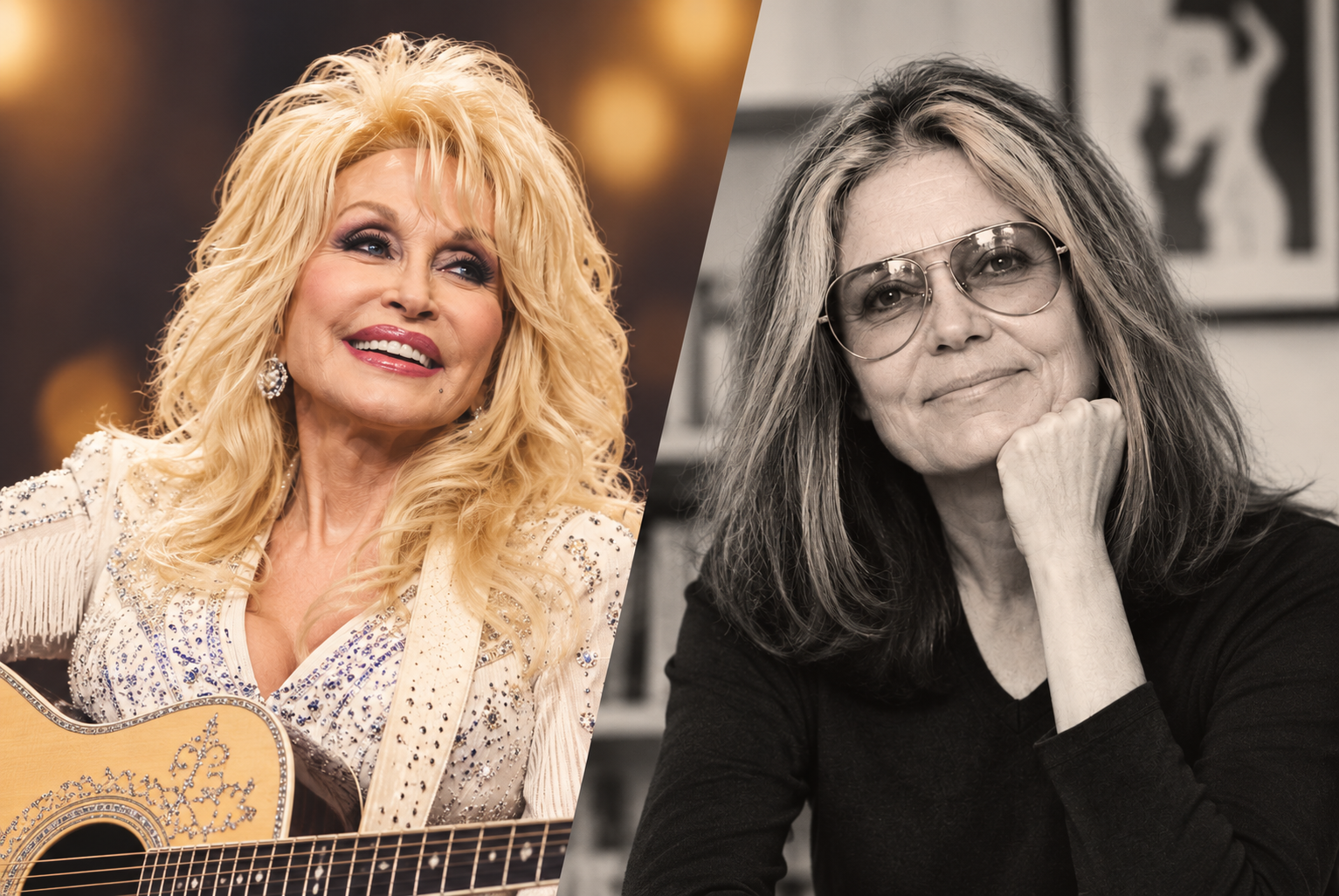
One built a career with a guitar, 3,000 songs, rhinestones, big hair, and an unmistakable Tennessee drawl. The other became one of the most recognizable voices of the women’s movement through journalism, speeches, organizing, and a pair of aviator glasses.
Their styles could hardly have been more different. But both women understood something fundamental about communication:
It isn’t enough to have something important to say. You have to say it in a way people will understand, remember, and repeat it.
That’s what made Dolly Parton and Gloria Steinem master communicators. When they died a week apart, they left an indelible legacy and a wealth of lessons.
Gloria made the complicated simple.
Gloria Steinem spent much of her career communicating complicated and controversial arguments about gender, power, equality, and social change. Yet she had a remarkable ability to compress big ideas into small packages.
She understood the power of the aphorism, the concise phrase that sticks in your head long after the speech or article is over. Her observations could be provocative, funny, and economical.
Consider one of her most famous lines:
“A woman needs a man like a fish needs a bicycle.”
The phrase is associated with Gloria, although she credited Australian activist Irina Dunn for originating it. That distinction is itself worth highlighting. Great communicators don’t necessarily invent every phrase they use. They recognize language with the power to travel and give credit where it belongs.
Her own writing was filled with similarly compact formulations. She could take a complex subject and give people language they could carry into another conversation. That’s the essence of a great sound bite: Not dumbing down but distilling down.
Dolly did the same but with stories.
Dolly was a natural storyteller. Her lyrics blend deeply personal pieces of her own life with vivid stories about people she has met, observed, or imagined.
Think of Coat of Many Colors. In a few minutes, she gives us childhood poverty, embarrassment, bullying, maternal love, gratitude, and dignity. We can see the coat, the little girl wearing it, and feel what happens when the other children laugh. She doesn’t explain the sociology of poverty but makes us feel it.
That’s one of the most important lessons in communication. Facts may help people understand an issue, but stories help them experience it. The best communicators know when we need each.
Humor can be a form of authority.
Dolly also mastered something that many executives and public speakers struggle with: self-deprecating humor without self-diminishment. She spent decades joking about her wigs, clothes, figure, and carefully constructed image. One of her most famous lines says it all:
“It costs a lot of money to look this cheap.”
That sentence is funny. But it’s also strategically brilliant, it gets to the joke before anyone else does. Dolly acknowledged what you’re thinking, laughed with you, and retained control of the narrative. That is different from making yourself smaller, so other people feel comfortable.
Gloria understood the power of humor, too, but she deployed it differently. Her wit was often dry, pointed, and subversive. One of the best examples is her satirical 1978 essay, “If Men Could Menstruate.” Rather than arguing directly about gender and power, she flipped the premise: What if men menstruated and women didn’t? She made us laugh at the absurdity and recognize the truth inside the joke.
Humor can be a form of authority. Dolly used it to disarm. Gloria used it to disrupt. Once an audience is smiling, you can take them somewhere they weren’t prepared to go before.
Two of my favorite quotes:
Dolly: “Find out who you are and do it on purpose.”
Gloria: “The truth will set you free, but first it will piss you off.”
Don’t surrender your authentic voice.
Dolly could have polished her Tennessee accent as her audience became national and then global, but she didn’t. She could have abandoned the rhinestones, wigs, and country persona to appear more serious. But she didn’t do that either. Instead, the characteristics that might once have caused people to underestimate her became inseparable from her brand.
There’s a communication lesson here that I repeat often in my coaching: You do not have to sound like everyone else to have authority.
An accent is not a deficiency, and a distinctive style is not a distraction. Executive presence does not require becoming a generic version of what we imagine a powerful person should look or sound like.
Dolly became universally recognizable precisely because she remained unmistakably Dolly. Gloria did not trade her authentic voice for acceptance either.
Gloria talked about subjects that made people uncomfortable: sexism, abortion, reproductive freedom, domestic violence, race, political power and limits on women’s choices. She was criticized, caricatured, and personally attacked. But she didn’t respond by becoming less Gloria. She remained direct, intellectually curious, collaborative, and unmistakably herself.
We sometimes confuse authenticity with warmth or likability. Authenticity isn’t a communication style. It’s the alignment between what you believe, what you say, and how you say it.
Great communicators create other communicators.
There is another fascinating connection between Dolly and Gloria. Neither used communication simply to amplify herself.
Gloria was a visionary who co-created Ms. magazine and numerous organizations that gave other women platforms from which to speak.
Dolly created something equally extraordinary: literacy education. Because her father could not read or write, she launched the Imagination Library to give free books to young children. It grew into an international literacy initiative that has distributed hundreds of millions of books.
Both women understood that having a voice is powerful. Helping someone else find theirs may be even more so.
And then, there’s listening.
Gloria was known not only as a speaker but as a listener and collaborator. That matters because we often confuse communication with transmission. Communication is an exchange. The ability to listen, read a room, understand what matters to other people, and then shape your message accordingly is what creates connection.
Dolly approached that connection through warmth, humor, story, music, and the pithy one-liner. Gloria did it through ideas, questions, and conversation. Different techniques with the same objective: Reach the human being on the other side.
Two voices. One enduring lesson.
Dolly could make us laugh before delivering the truth. Gloria could distill an enormous social issue into a sentence people repeated for decades. One wore rhinestones. The other wore aviators.
But both understood something every leader, speaker, and communicator should remember: Your expertise isn’t valuable simply because you possess it.
- You must transmit it.
- Make the complex understandable.
- Make the abstract human.
- Give people language they can remember.
- Tell stories they can retell.
- Listen before you speak.
- And above all, communicate in a voice that sounds unmistakably like your own.
Because the true measure of communication isn’t how brilliant you sounded while you were speaking. It’s what people remember after you stop speaking.