
Long before there were emojis, there were hands.
Every conversation, presentation, negotiation, and story we’ve ever told has been accompanied by them. We wave hello, point the way, applaud a victory, offer a handshake, signal “stop,” and raise a thumb in approval. Our hands often speak before we do.
It’s no surprise, then, that many ancient traditions believed our hands carried far more than physical movement. They carried energy.
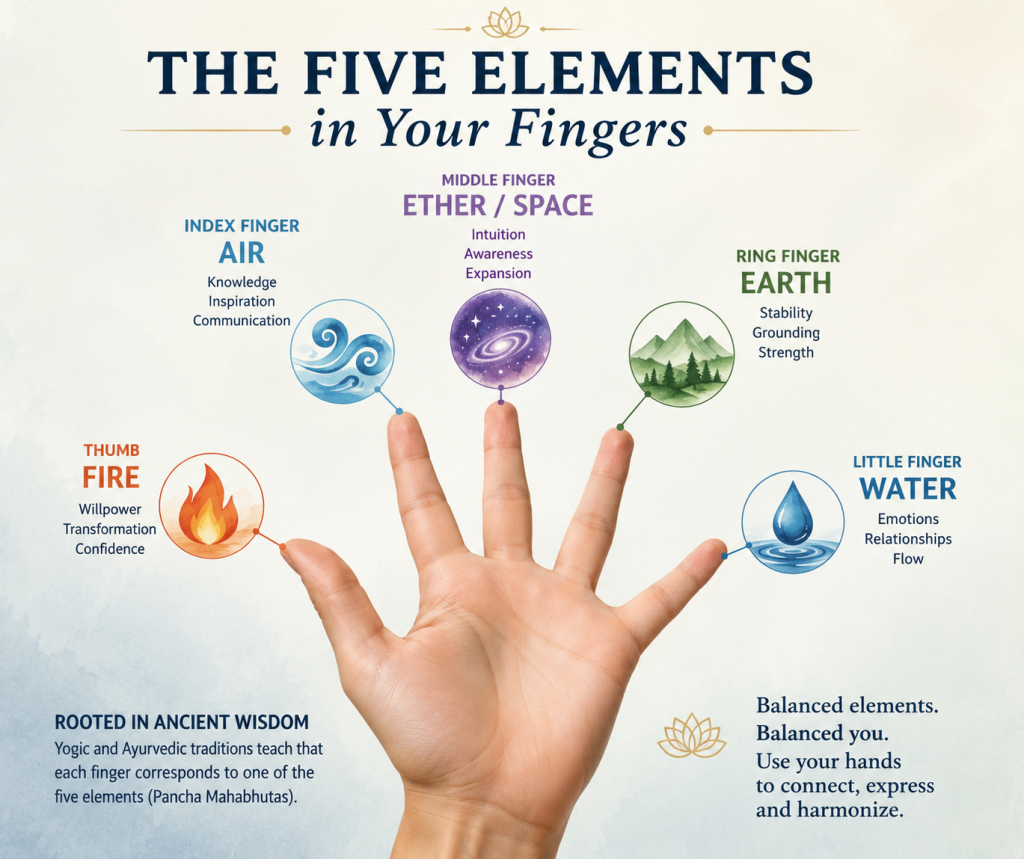
In yoga and the Ayurvedic holistic medicine tradition, each finger is associated with one of the five natural elements. The thumb represents fire, the index finger air, the middle finger space or ether, the ring finger earth, and the little finger water. Through mudras (specific hand positions used in meditation and yoga), practitioners believe these elements can be balanced to promote physical, emotional, and spiritual well-being.
Whether you embrace those beliefs as spiritual truth or simply appreciate them as centuries-old tradition, they point to something profound: our hands matter. Modern neuroscience arrives at a similar conclusion, albeit through a different path.
Researchers have discovered that our hands occupy an astonishing amount of “real estate” in the brain. Large portions of the motor cortex and sensory cortex are devoted to controlling and sensing our fingers. This explains why the human hand is capable of extraordinary precision, but it also reveals something equally fascinating: When we move our hands, we activate our brains.
Studies show that gestures help us organize our thoughts, retrieve memories, reduce cognitive load, and explain complex ideas more effectively. In fact, people gesture even when no one can see them, such as while talking on the phone. That’s because gestures aren’t merely for the audience; they help the speaker think.
This is one reason I encourage my executive coaching clients to stop worrying so much about what to do with their hands. Instead, let your hands help you think.
Your hands are physical emojis
I often tell clients that your hands are physical emojis.
Just as a smiling emoji softens a text message, your hands add emotional meaning to your spoken words. They communicate sincerity, confidence, openness, enthusiasm, and empathy long before your audience consciously processes your message.
An open palm says: “You can trust me.”
A finger pointed directly at someone often says: “I’m accusing you.”
Hands pressed together can communicate gratitude, respect, or reflection.
A precise pinch of the thumb and forefinger tells the audience: “Pay attention. This matters.”
Without saying a word, your hands provide emotional punctuation for your message.
Speech and gesture are one system
Psycholinguists have long argued that speech and gesture are inseparable. They evolved together as one communication system.
Think about how difficult it is to explain directions while sitting on your hands. Or describe the size of a fish without spreading your arms. Or tell a story without illustrating it. You probably can’t. Our brains naturally synchronize speech and movement because communication was never meant to happen with words alone.
This explains why speakers who keep their arms glued to their sides often appear stiff, robotic, or disconnected. It’s not because they’re poor speakers, but because they’re suppressing one of the brain’s natural communication tools.
Ancient wisdom meets modern science
I find it fascinating that two very different worldviews arrive at a remarkably similar conclusion. Ancient yogic traditions suggest that specific hand positions influence our internal state through the flow of energy. Modern neuroscience suggests that moving our hands influences our thinking, emotional regulation, and communication through the nervous system.
The explanations differ. The outcome is surprisingly similar. Yet both recognize that the hands are far more than mechanical tools. They are deeply connected to the way we think, feel, and communicate.
Don’t choreograph your hands
One misconception about body language is that every gesture needs to be rehearsed. Great speakers use gestures freely. They don’t memorize them. When your message is clear, and you’re genuinely connected to your audience, your hands usually know what to do.
This is why I urge my clients to let their hands move naturally but to have a “vocabulary” of specific gestures to match strategic messages as needed.
Let your hands speak
Whether you’re delivering a board presentation, leading a team meeting, or speaking on stage, don’t underestimate one of your most powerful communication tools.
Your hands are part of your language. Whether you believe they channel energy, activate the brain, or simply reflect genuine human expression, they enrich every conversation.
The next time you prepare a presentation, don’t ask yourself, “What should I do with my hands?”
Ask instead, “How can my hands help my audience feel and understand what I’m saying?”